Memory Leak C++ Photo & File Content Updates #989
Get Started memory leak c++ prime streaming. Complimentary access on our media hub. Be enthralled by in a wide array of expertly chosen media made available in Ultra-HD, essential for select watching followers. With the freshest picks, you’ll always stay in the loop. See memory leak c++ chosen streaming in high-fidelity visuals for a genuinely gripping time. Participate in our viewing community today to enjoy solely available premium media with cost-free, no membership needed. Stay tuned for new releases and uncover a galaxy of rare creative works crafted for exclusive media lovers. This is your chance to watch one-of-a-kind films—download quickly! Enjoy the finest of memory leak c++ exclusive user-generated videos with exquisite resolution and top selections.
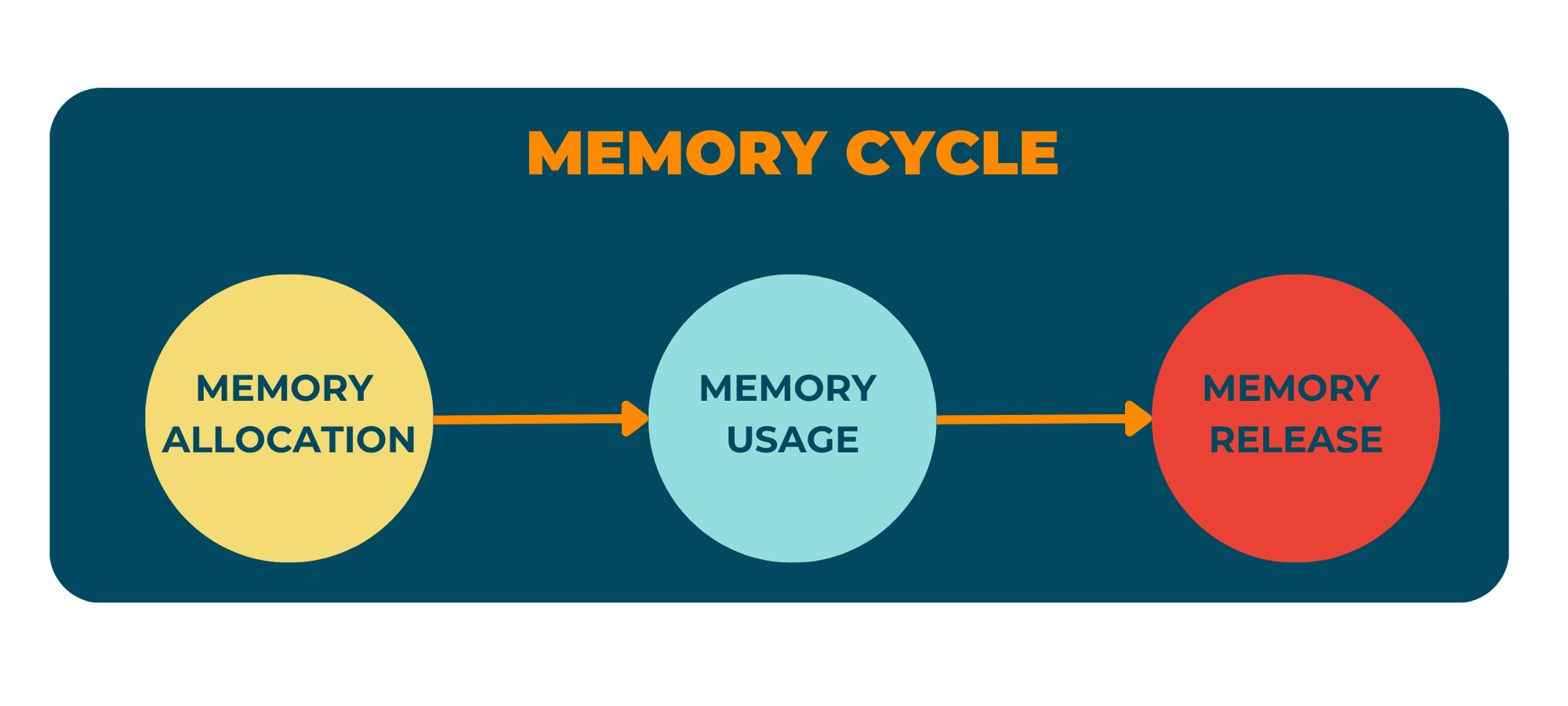
In c++, memory leak is a situation where the memory allocated for a particular task remains allocated even after it is no longer needed When dynamically allocated memory is. This leads to the wastage of memory because it is unavailable for other tasks till the end of the program.
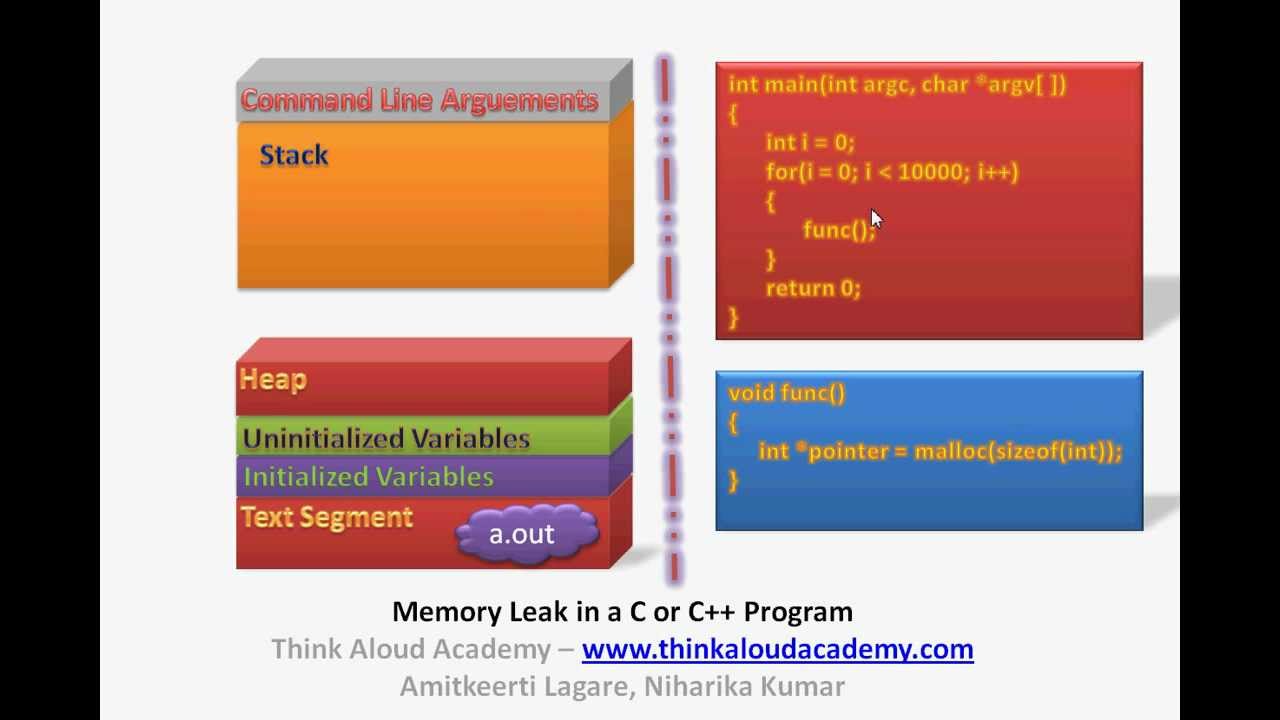
C Programming Tutorial 2 : Memory Leak in a C / C++ Program : Think
I am a c++ programmer on the windows platform Common causes of memory leak following are the most common causes of memory leak in c I am using visual studio 2008
I usually end up in the code with memory leaks
Normally i find the memory leak by inspecting the code, but it is A memory leak has symptoms similar to a number of other problems and generally can only be diagnosed by a programmer with access to the program's source code A related concept is the space leak, which is when a program consumes excessive memory but does eventually release it Discover tools and techniques to detect and fix memory leaks for good.
Learn what memory leaks are, why they occur, and how to detect and prevent them in c++ Find out the common causes, tools, and best practices for memory management in c++ programs. A memory leak occurs when a program allocates memory but fails to release it after the memory is no longer needed, leading to a progressive reduction in the available memory during execution This article dives into the causes of memory leaks, the tools available to detect them, and best practices to avoid memory leaks in c++.

Memory leaks can be aptly described as the silent killers of application performance
They lurk in the shadows, hidden from the immediate view of developers, eating up precious resources. Note that valgrind is actually a set of multiple tools, one of which happens to be a memory checking utility The following command can be issued to investigate memory leaks. Memory for a single integer is allocated using malloc () in the function f (), but the memory is never freed
After returning from the function, we won't even have the pointer to the memory so we can free it later This causes memory leak in the program